Sustainability reporting has moved from optional to expected across the UAE. Regulators, investors, partners and employees increasingly ask for it, and the UAE Net Zero 2050 agenda has put ESG on the desk of organisations that had never published a report before. The result is a lot of first sustainability reports, and a lot of teams unsure how to structure one.
The common failure is not a lack of data!
It is a report that reads like a compliance document: dense, defensive, and hard to get through. A good sustainability report does the opposite. It is structured so that a reader can follow the story, trust the numbers, and finish with a clear sense of where the organisation stands and where it is going.
Start with the Reader, not the Framework
Frameworks like GRI, and increasingly IFRS S1 and S2, matter and shape what you disclose. But a report built only to satisfy a framework tends to bury the story. The organisations that produce strong reports decide who the report is really for, whether investors, regulators, partners or employees, and structure the narrative for them first, then map the required disclosures into it. Compliance is the floor, not the design.
A Clear Structure for a Sustainability Report
Most effective sustainability reports follow a version of this structure:
- Leadership statement: a genuine account from the top of why sustainability matters to this business, not a generic message.
- About this report: scope, period, frameworks used and any restatements, kept short and clear.
- Materiality: what matters most to the business and its stakeholders, and how you decided, which sets the priorities for everything after.
- Strategy and governance: how sustainability is run, who is accountable, and how it connects to the wider business.
- Performance by pillar: environment, social and governance, each with targets, progress, data and honest commentary on what drove it.
- Targets and roadmap: where you are heading, with dates, so readers can judge ambition against progress.
- Data and assurance appendix: the detailed tables, methodology and any third-party assurance.
Where Sustainability Reports go Wrong
- The data is thorough but the story is missing, so readers cannot see the direction.
- Every metric is presented as a success, which erodes trust.
- Materiality is skipped, so the report has no sense of priority.
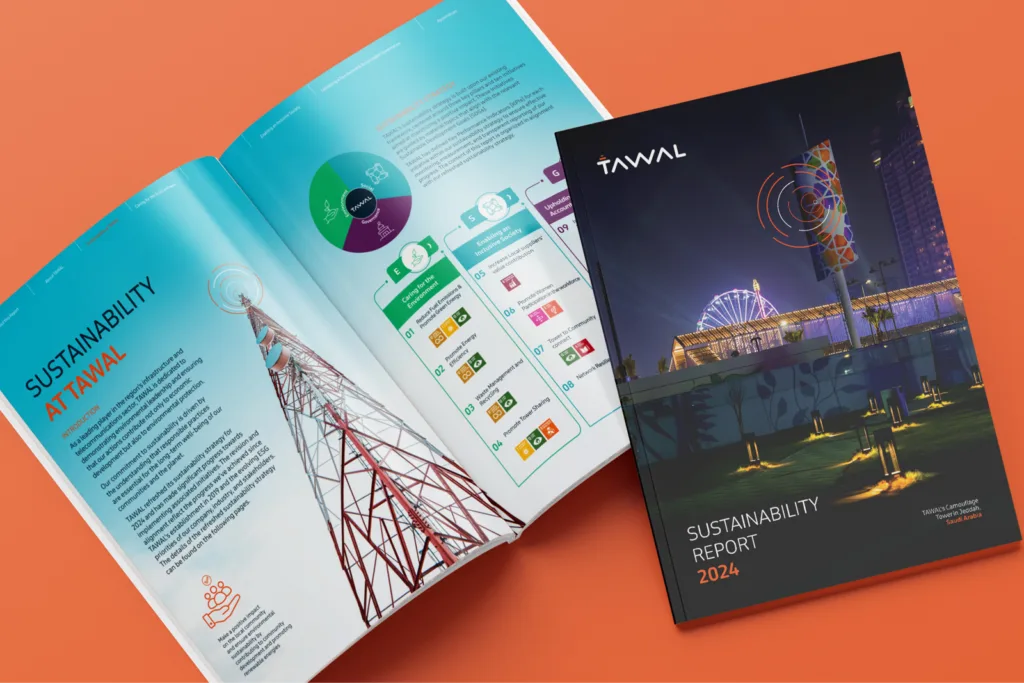
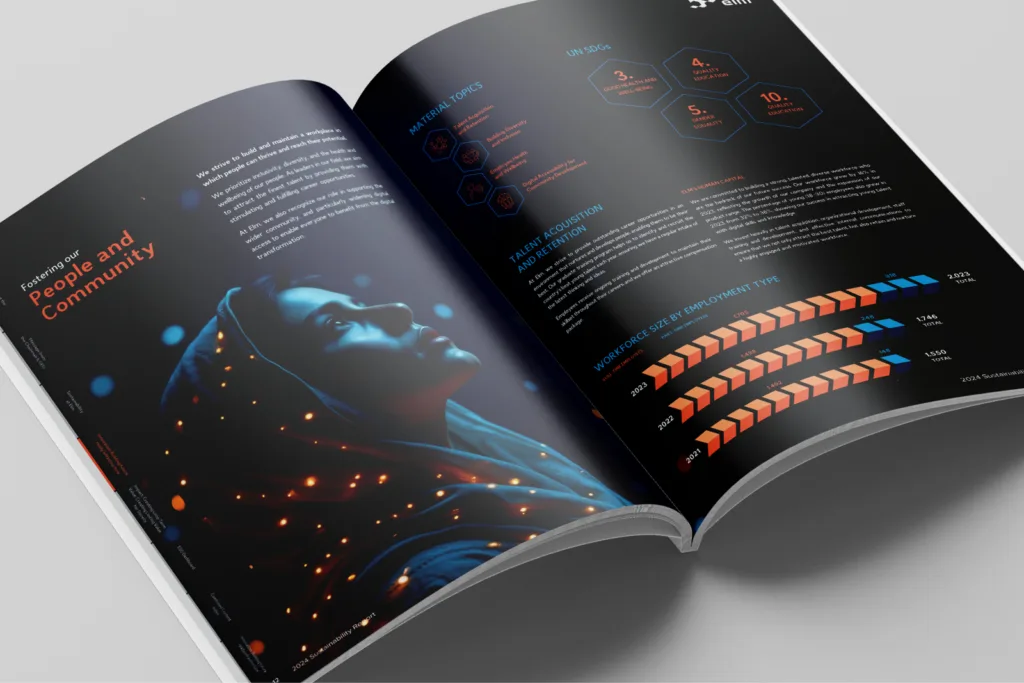
- The design fights the reader, with dense pages and no visual hierarchy.
- The commitments are vague, with ambition but no dates.
- Arabic and English versions do not match, in content or in care.
Good sustainability reporting is about more than collecting data. It is about making that data useful, connecting performance to business decisions, and giving readers a clear picture of progress.
Numbers Need a Narrative
A sustainability report has to do two things at once: satisfy a technical reader who will check the data, and give a general reader a clear line to follow. That is a communication problem as much as a reporting one. The best reports pair rigorous, well-presented data with a narrative that explains what the numbers mean, what changed, and what happens next. Design carries a lot of this load, turning a wall of figures into something a reader can navigate and trust.
A Readiness Check Before you Start
You are ready to produce a strong report when you can answer:
- Who is this report really for, and what do they need from it.
- What are our material issues, and how did we decide.
- Which frameworks are we reporting against.
- What are our targets, and can we show honest progress.
- Who owns the data, and is it consistent and assured.
- Will the Arabic and English versions carry the same story.
Beyond Numbers: Designing Mashreq’s 2023 Annual Report
Frequently Asked Questions
What is the difference between an ESG report and a sustainability report?
The terms are often used interchangeably. In practice, ESG tends to emphasise the environmental, social and governance factors investors assess, while sustainability report is a broader label for how an organisation manages its impact. What matters more than the name is that the report is material, credible and clearly structured.
Which reporting framework should we use in the UAE?
It depends on your sector, stakeholders and listing status. GRI is widely used, and IFRS S1 and S2 are becoming more important for investor-focused disclosure. Many UAE organisations report against more than one. The framework should follow your audience and obligations, not the other way round.
How long should a sustainability report be?
Long enough to be credible, short enough to be read. Length matters less than structure. A focused report with a clear materiality basis and a strong data appendix beats a long one that buries the story.
Can a sustainability report be part of the annual report?
Yes. Many organisations produce an integrated report that brings financial and sustainability performance together, or include sustainability as a clear section of the annual report. The right approach depends on your audience and how connected the two stories are.
Formulate produces annual, integrated and sustainability reports for organisations across the region, handling theme, narrative, data presentation, bilingual production and print through one team. If you are planning your next sustainability report, we would be glad to help you structure it well.
See our work: Mashreq's 2023 annual report.